How Businesses Can Manage Customer Conversations on WhatsApp More Effectively
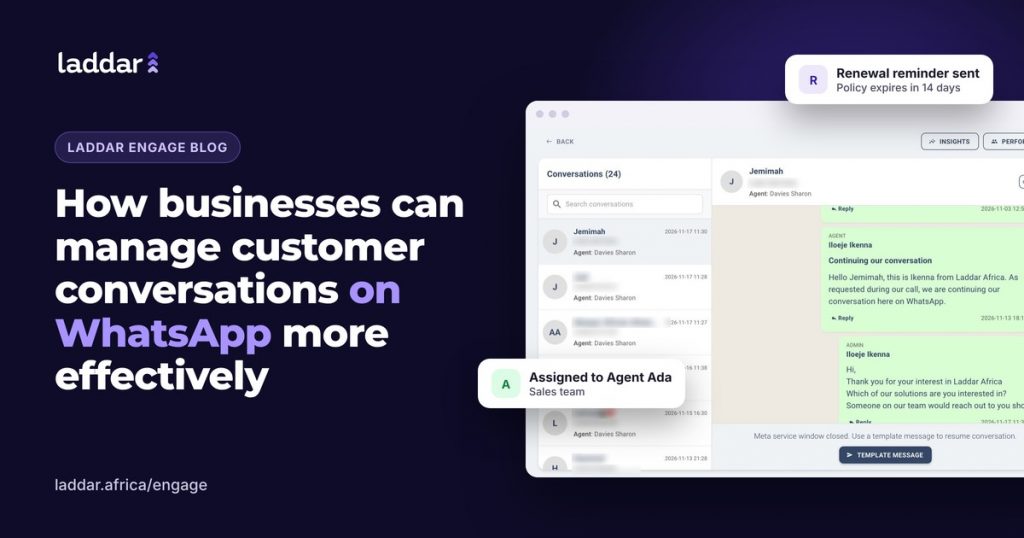
WhatsApp has become an important part of how businesses communicate with customers.
Customers use it to ask questions, make enquiries, place orders, request updates and follow up on services. For many organisations, it has become one of the most active customer communication channels.
But as businesses grow, managing these conversations becomes more complicated.
A process that works when one person handles customer messages on one phone may not work when several employees are involved.
Messages become scattered across different devices. Follow-ups are missed. More than one employee may respond to the same customer, while managers struggle to keep track of what is happening.
The challenge is no longer simply being available on WhatsApp. It is managing the channel properly.
Why managing business WhatsApp conversations becomes difficult
1. Customer conversations are scattered across devices
When employees use individual phones to respond to customers, the business has no central view of its communication.
A customer may speak to one sales representative today and another support agent tomorrow, with neither having access to the full conversation.
This creates unnecessary repetition and makes it harder to provide consistent customer service.
2. Customer information can leave with employees
When customer contacts and conversations are stored on personal devices, the business risks losing access to valuable information when employees leave.
Customer history should remain accessible to authorised members of the organisation, regardless of who originally handled the conversation.
3. Teams struggle with accountability
Without a shared communication system, managers may not know who responded to a customer, whether an enquiry was resolved or which conversations still need attention.
A centralised workspace makes it easier to assign conversations and monitor team activity.
4. Important follow-ups depend on manual effort
Businesses send different types of customer messages every day.
Payment reminders, policy renewals, appointment confirmations and order updates all require timely communication.
When employees have to remember and send each message manually, important follow-ups can easily be delayed or missed.
What businesses need from a WhatsApp management platform
A business WhatsApp platform should do more than allow employees to read and respond to messages.
It should provide the structure needed to manage customer communication as an operational function.
Some important capabilities include:
A shared team inbox
Multiple authorised agents should be able to manage customer conversations from one business number.
Conversations should be assigned to agents, with clear records of who responded.
Centralised customer conversation history
Customer conversations and contacts should remain within the business workspace.
This makes it easier for another team member to continue an interaction without asking customers to repeat information.
Campaigns and broadcasts
Businesses should be able to communicate product announcements, promotions and important updates to customers who have opted in to receive messages.
Automated reminders
A business should not need to manually remember every payment reminder, appointment notification or policy renewal.
Automation helps ensure that scheduled messages go out when they are due.
Transactional messages and OTPs
Businesses should be able to trigger order confirmations, payment receipts, account alerts and secure verification codes from their existing systems.
Team reporting and visibility
Managers need to understand how conversations are being handled, including agent activity and response performance.
How businesses can use WhatsApp beyond customer support
WhatsApp can support different stages of the customer journey.
For an insurance company, it can be used to remind customers about policy renewals and provide claims updates.
For a bank or fintech, it can support authentication messages, transaction alerts and customer enquiries.
For retailers, it can help manage product enquiries, order confirmations, promotional campaigns and delivery updates.
For healthcare providers, it can support appointment reminders and booking confirmations.
For educational institutions, it can help communicate fee reminders, admission updates and schedule changes.
The opportunity is to move beyond using WhatsApp only when customers initiate conversations and make it a more organised part of business communication.
Where AI fits into business WhatsApp communication
AI can support customer service teams, but it should not remove the need for human judgement.
For example, AI can suggest responses to common enquiries, summarise long conversations and help answer routine questions outside business hours.
However, customer complaints, sensitive issues and conversations that require a decision should still reach the appropriate person.
The most useful approach is one where AI assists employees while businesses retain control over how customers are served.
Introducing Laddar Engage
At Laddar Africa, we recognise that businesses need more structure and control over the communication channels their customers already use.
That is why we built Laddar Engage.
Laddar Engage gives businesses one WhatsApp workspace to manage customer conversations, campaigns, automated reminders and transactional messages.
With multi-agent access, conversations can be assigned to employees while customer history remains within the business.
Businesses can also run campaigns, schedule reminders, send transactional messages and secure OTPs through their existing systems.
AI assist is available for suggested replies, conversation summaries and out-of-hours responses when businesses choose to activate it.
The goal is simple: help businesses manage WhatsApp as a proper business communication channel.
Make WhatsApp work for your business
As customer expectations change, businesses need communication processes that can grow with them.
Being available on WhatsApp is a good starting point. Having the right system to manage those interactions is what makes the difference.
With the right platform, businesses can organise conversations, improve team accountability, automate important messages and maintain better control over customer relationships.
Discover Laddar Engage and see how your business can manage customer communication more effectively.